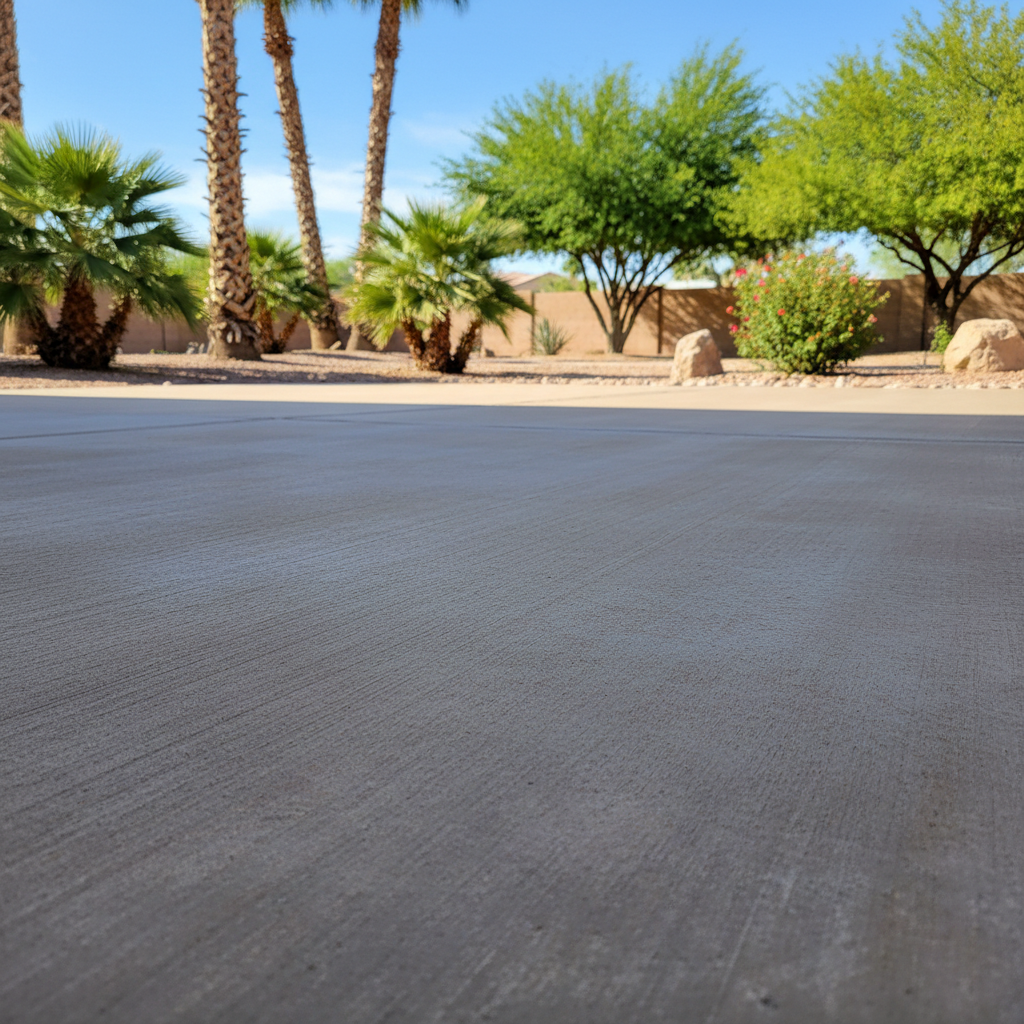
You're thinking about a new concrete slab, maybe a patio out back or a wider driveway apron. That's a great idea for boosting your home's value and usability, especially with our Arizona sun. But before you rent a mixer and start digging, let's get real about what you can realistically do yourself and when you absolutely need to call in a professional like us at Coolidge Concrete Paving.
Before You Start: Planning & Permits
First off, don't skip the planning. This isn't just about how big you want your slab. You need to think about drainage, especially with our monsoon rains. You don't want water pooling against your foundation or running into your neighbor's yard. Slope is everything here. A good rule of thumb is a quarter-inch drop per foot away from your house.
Then there's the permit. For most significant concrete projects in Coolidge, you'll need one. Check with the city's planning department. They'll tell you what's required. Trying to sneak around permits can lead to fines, tear-outs, and a whole lot of headaches down the road. It's not worth it.
What you can DIY here: You can sketch out your design, measure the area, and even research the permit requirements yourself. You can also call 811 before you dig to get utility lines marked – that's non-negotiable for anyone doing excavation.
When to call a pro: If your project is large, complex, or involves structural elements like a foundation, a pro can help with design, engineering, and navigating the permit process. We've done it a thousand times; we know the ropes.
The Groundwork: Excavation & Base Prep
This is where a lot of DIYers either shine or get into serious trouble. Proper excavation and base preparation are crucial for a long-lasting concrete slab, especially with our caliche soil around Coolidge. If you don't get this right, your concrete will crack, settle, and just generally look like a mess in a few years.
You need to dig down deep enough for your slab thickness plus a good, compacted base of gravel or aggregate. For a typical patio or walkway, you're usually looking at 4 inches of concrete on top of 4-6 inches of compacted base. That's a lot of dirt to move, and it needs to be level, then sloped correctly for drainage.
What you can DIY here: For small, simple projects like a small AC pad or a very short, narrow walkway, you might be able to handle the digging and base prep yourself, especially if you rent a small excavator or have a strong back and plenty of time. You'll need a tamper to compact that base properly – don't just walk on it and call it good.
When to call a pro: Anything larger than a small pad, or projects with significant slopes, curves, or where precise leveling is critical. We've got the heavy equipment to excavate efficiently and the laser levels to get your base perfectly graded and compacted. We also know how to deal with tough soil conditions like the hardpan we often find here in Pinal County.
The Pour: Forms, Rebar & Concrete
Okay, this is the big one. Pouring concrete isn't just about dumping it out of a truck. You need solid forms that won't blow out, proper reinforcement (rebar or mesh) to prevent cracking, and then the actual pouring, screeding, floating, and finishing. This all happens fast once the truck arrives. Concrete waits for no one.
The mix itself matters too. You need the right strength for the job. A driveway needs a stronger mix than a garden path. And then there's the finishing – getting that smooth, even surface, adding control joints, and curing it properly.
What you can DIY here: Honestly, not much of the actual pour for anything beyond a tiny, non-critical slab. Maybe a small stepping stone or a very simple, shallow repair. Even then, getting a good finish is tough.
When to call a pro: For pretty much any concrete pour you want to look good and last. We've got the crew, the tools, and the experience to handle the entire process from setting forms to cutting control joints. We know how to work with the specific concrete mixes needed for our climate and how to finish it right, whether you want a broom finish for traction or something smoother.
After the Pour: Curing & Sealing
Once the concrete is down and finished, your job isn't over. Curing is vital. This means keeping the concrete moist for several days to allow it to gain maximum strength and reduce cracking. In our dry Coolidge air, this is even more important. You can do this by misting it with water, covering it with plastic sheeting, or using a curing compound.
After it's fully cured (usually 28 days for full strength), you should consider sealing it. A good sealer protects your concrete from stains, water penetration, and general wear and tear, making it last longer and look better.
What you can DIY here: Absolutely. Curing and sealing are definitely homeowner-friendly tasks. Just follow the instructions for the curing method and sealer you choose.
When to call a pro: If you're unsure about the best curing method for your specific project or need advice on the right type of sealer for your concrete's use and exposure, we can certainly point you in the right direction or even apply the sealer for you as part of a larger project.
Look, I'm all for homeowners tackling projects they can handle. It saves money and you learn a lot. But when it comes to concrete, especially anything structural or larger than a small pad, the risks of a bad DIY job far outweigh the cost savings. A poorly poured slab means wasted materials, wasted time, and often, having to pay a pro to tear it out and do it right anyway. Give us a call at Coolidge Concrete Paving if you've got a project in mind. We're happy to talk through your options and give you an honest assessment of what it'll take.