How long does concrete really last around here?
That's a big question, and honestly, there's no single, simple answer. A concrete slab in Coolidge that's been installed correctly – with the right mix, rebar, and proper curing – can easily last 25 to 30 years, sometimes even longer. But "installed correctly" is the crucial part, isn't it? If someone cuts corners, or if you've got bad drainage, or if the sub-base wasn't prepped right for our Pinal County soil, you're looking at a much shorter lifespan. I've personally seen driveways barely make it ten years because someone tried to save a buck and didn't compact the ground underneath. On the flip side, we've got patios we poured decades ago that still look fantastic. It's an investment, so you really want to make sure it's done right the first time.
What causes concrete to crack, and can it be prevented?
Cracking is pretty much unavoidable to some extent; concrete shrinks as it dries, and that creates stress. Imagine a big, rigid sheet trying to pull itself apart. But you can absolutely control *where* it cracks and minimize how big those cracks get. The main culprits are:
- Shrinkage: This is the big one. As water evaporates from the mix, the concrete contracts.
- Thermal Expansion/Contraction: Our Coolidge summers are brutal, and the winters can get surprisingly chilly. Concrete expands when hot and contracts when cold. Without proper expansion joints, it'll crack under all that stress.
- Settling Sub-base: If the ground underneath isn't stable or compact, the concrete will settle unevenly and, you guessed it, crack.
- Overloading: Parking heavy RVs or equipment on a slab not designed for that weight will definitely cause stress and cracks.
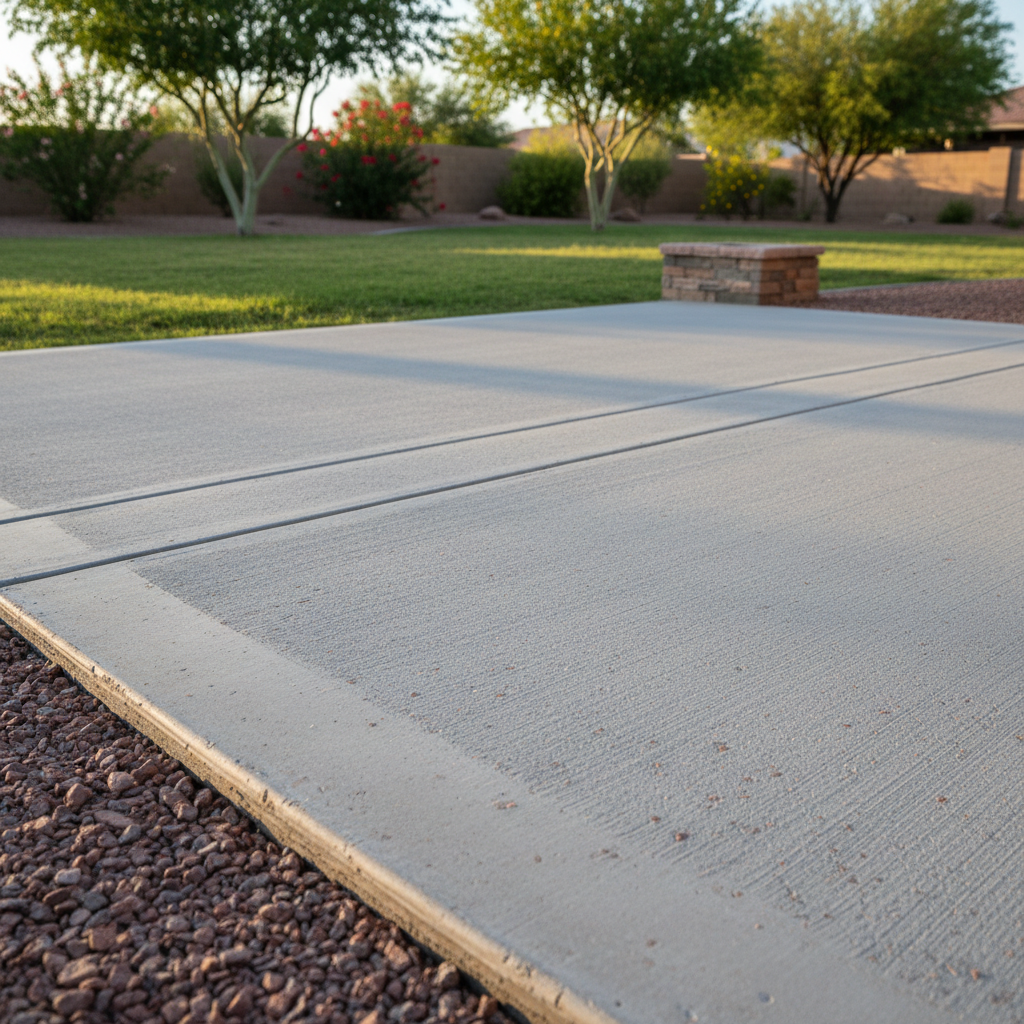
Prevention? It's all about control joints (those saw cuts or troweled grooves that create weakened lines where the concrete *should* crack), proper sub-base preparation, the right mix design, and good curing practices. We always make sure to put in enough control joints, typically every 10-12 feet for a driveway, to guide those shrinkage cracks where you won't see them or where they won't cause structural issues.
How long do I really have to wait before I can drive or walk on new concrete?
This is where patience pays off, big time. You can usually walk on new concrete within 24-48 hours, especially in our dry Coolidge climate. But driving on it? That's a completely different story. For light vehicle traffic, I always tell folks to wait at least 7 days, and preferably 10-14 days if you can manage it. For heavy vehicles, like an RV or a delivery truck, you really want to give it a full 28 days. That's when concrete reaches its full design strength. Rushing it can cause permanent damage, tire marks, or even structural failure down the road. It's just not worth the risk.
What's the deal with sealing concrete? Do I really need to do it?
Yes, you absolutely should seal your concrete, especially here in Arizona. Think of it like sunscreen and a protective jacket for your slab. Sealing helps in several ways:
- Stain Protection: Oil, grease, rust, even spilled drinks – a good sealer makes it much harder for these to penetrate and stain your concrete.
- Moisture Protection: It reduces water absorption, which is crucial for preventing freeze-thaw damage (though less of an issue here than up north, it still helps with general longevity).
- Abrasion Resistance: It makes the surface tougher and more resistant to wear and tear from foot traffic and vehicle tires.
- UV Protection: Our intense sun can fade and degrade concrete over time. Sealers offer a layer of UV protection.
I recommend sealing new concrete within a month or two of installation, and then re-sealing every 2-5 years depending on traffic and exposure. It's a relatively inexpensive maintenance step that adds years to your concrete's life and keeps it looking good. We at Coolidge Concrete Paving can even help you pick the right sealer for your specific needs.
My concrete looks dull and dirty. Can it be cleaned, or does it need to be replaced?
Most of the time, it just needs a good cleaning! Concrete is porous, so it absorbs dirt, grime, and even algae or mildew if it's in a shady, damp spot. Before you even think about replacement, try a thorough cleaning. For most homeowners, a pressure washer (used carefully, not too close to the surface) with a good concrete cleaner can work wonders. For tougher stains like oil or rust, you might need a specialized degreaser or rust remover. If it's really bad, or if you don't want to mess with it, professional cleaning services can often restore a surprising amount of life to old concrete. Replacement is usually only necessary if you have widespread, severe cracking, heaving, or crumbling that compromises the structural integrity or creates a major tripping hazard.
What kind of maintenance does concrete need after it's installed?
Good question. Concrete isn't maintenance-free, but it's pretty low-maintenance compared to some other materials. Here's what I tell my customers:
- Regular Cleaning: Sweep or hose off dirt, leaves, and debris regularly. This prevents organic matter from breaking down and staining the surface.
- Prompt Spill Cleanup: If you spill oil, grease, or anything else, clean it up as quickly as possible before it has a chance to soak in.
- Sealing: As I mentioned, re-seal every few years to protect against stains and wear.
- Joint Maintenance: Check your expansion joints. If the filler material (often a flexible caulk) is cracking or missing, replace it. This keeps water from getting under the slab and causing problems.
- Address Cracks Early: Small cracks can sometimes be filled with a concrete caulk or repair kit to prevent them from getting worse or allowing water intrusion.
That's about it. A little bit of attention goes a long way in keeping your concrete looking good and performing well for decades.