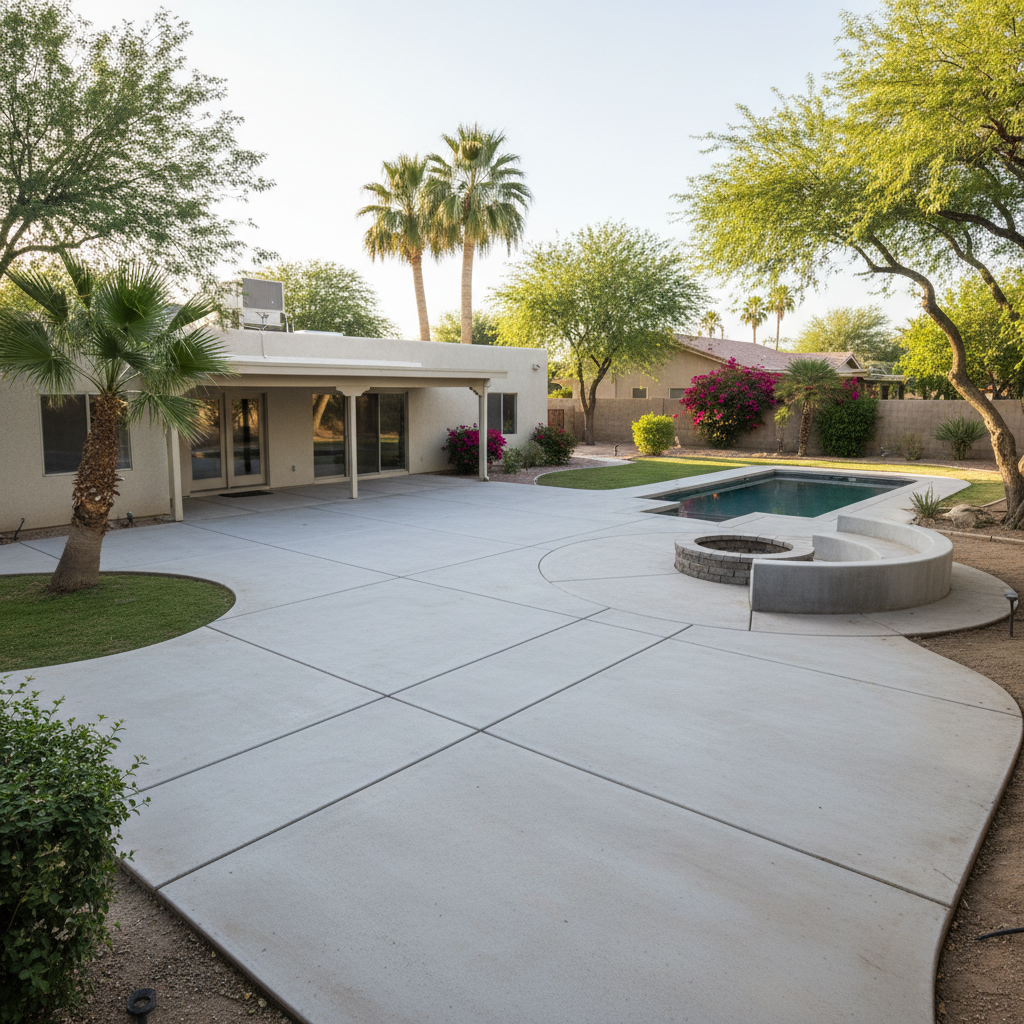
Finally ready for that concrete patio you've been dreaming about? It's a smart move, especially here in Coolidge where we practically live outdoors. But before you dive in, you'll want a solid plan. Building a good patio isn't just about pouring concrete; it's about making sure the job gets done right, on time, and without any nasty surprises popping up.
Understanding Your Patio Project Timeline
So, how long does this whole thing actually take? That's usually the very first question I hear. The honest answer is, it changes, but I can certainly give you a pretty good idea of what to expect. From your first phone call to finally kicking back in your new outdoor space, here’s a typical timeline:
- Initial Contact & Consultation (1-2 weeks): You give us a shout, and we set up a time to swing by. We'll check out your yard, chat about what you envision, and take some measurements. This is where we nail down the project's scope, brainstorm design ideas, and just make sure we're all on the same page.
- Quote & Contract (1-3 days after consultation): We'll get a detailed quote over to you pretty quickly. Once you've looked it over and are happy with everything, we'll sign the contract. This locks in the price and exactly what work we'll be doing.
- Permits (2-4 weeks, sometimes more): This often feels like the longest stretch of waiting. Now, not every small patio needs a permit in Coolidge, but bigger or more complex designs — especially if they involve a lot of grading or are attached to your house — absolutely will. We handle the permit application, but truthfully, the city's timeline is out of our hands. And hey, if anyone tells you they can skip this step when it's required, run the other way; it'll only lead to headaches later.
- Scheduling & Material Delivery (1-2 weeks after permit): Once we've got that permit in hand, we'll get you on our schedule. We also order all the materials — concrete, rebar, forms, gravel — to make sure everything's ready to go for pour day.
- Site Preparation & Pour (2-5 days): This is when the actual construction kicks off. We'll clear the area, dig out the base, lay down gravel, compact it like crazy, set up forms, and install any rebar or wire mesh. Then comes the exciting part: the concrete pour itself. Depending on the size and how complicated the job is, this could be one long day or spread out over a couple.
- Curing (3-7 days minimum): After the concrete's poured, it needs time to cure. You can usually walk on it after a day or two, but you really shouldn't put heavy furniture on it or drive on it for at least a week, sometimes even longer. We'll give you specific instructions for your new patio.
- Sealing (Optional, 28 days after pour): If you choose to have it sealed, we generally suggest waiting about 28 days for the concrete to fully cure before we apply the sealer. This protects it and makes cleaning a breeze.
So, from start to finish, you're typically looking at anywhere from 4 to 8 weeks. Most of that time is spent waiting for permits and for the concrete to cure. Please, don't try to rush the curing; it's super important for the concrete's long-term strength.
What to Expect During the Process
When we're actually working on site, here's what you can expect:
- Noise and Dust: We're going to be digging, compacting, and pouring. So, yeah, there will be some noise from our equipment and a bit of dust floating around. We do our best to keep it contained, but it's just part of the job.
- Equipment: You'll see trucks, excavators (for bigger projects), concrete mixers, and a whole lot of tools. We'll need space to work and to keep our materials.
- Foot Traffic: Our crew will be moving around your yard. We're always respectful of your property, of course.
- Communication: We'll keep you in the loop every step of the way. If anything unexpected comes up or there are any changes, we'll talk to you right away.
- Clean-up: Once the job is finished, we'll clean up the site, haul away all the debris, and leave your yard as tidy as possible.
How to Prepare Your Home and Yard
You can help make the whole process go a lot smoother. Here's how:
- Clear the Area: Move any outdoor furniture, planters, grills, or anything else from the patio area itself, plus a good buffer zone around it. If you've got any delicate plants or landscaping nearby, maybe protect them temporarily.
- Access: Make sure we have a clear path to the work site. That means moving vehicles, unlocking gates, and ensuring there are no obstructions. We'll need room for our equipment and to bring in materials.
- Utilities: Mark any sprinkler lines, buried dog fences, or other shallow utilities you know about. We always call 811 before we dig, but your input really helps prevent accidental damage.
- Pets and Kids: Please keep pets and children away from the construction zone for their own safety. This is especially critical during the pour and while the concrete is still wet.
- Water Access: We'll need access to an outdoor water spigot.
- Electricity: For some of our tools, we might need access to an outdoor electrical outlet.
Crucial Questions to Ask Before Signing a Contract
Don't just sign the first thing someone puts in front of you. Ask these questions to make sure you're getting a reliable contractor and a quality job:
- Are you licensed and insured? This is non-negotiable. A legitimate contractor in Arizona will have a Registrar of Contractors (ROC) license and carry liability insurance. Don't work with anyone who can't show you proof.
- What's included in the price? Get a detailed breakdown. Does it cover excavation, base material, rebar or mesh, the concrete itself, finishing, and clean-up? What about permit fees? Make sure there are no hidden costs.
- What kind of concrete mix will you use? For our intense Coolidge summers and expansive soils, you really want a good quality mix. We usually recommend a 3000-3500 PSI mix with fiber mesh for patios; it handles the temperature swings and our specific ground conditions really well.
- How will you prepare the base? Proper base preparation is absolutely key for a patio that lasts. They should be excavating, laying down a gravel base, and compacting it thoroughly.
- What kind of reinforcement will you use? Rebar or wire mesh? For a patio, wire mesh is common, but for larger or heavily loaded patios, rebar might be a better choice.
- What's your warranty? A reputable contractor will stand behind their work. Ask about their warranty on both workmanship and materials.
- Can I see references or examples of your work? Any good contractor will be proud to show off their past projects and connect you with happy customers.
- What's your payment schedule? Typically, there's an upfront deposit, then progress payments, and a final payment once the job is complete. Just make sure it's all clear.
- Who handles the permits? We always handle the permits for our clients here at Coolidge Concrete Paving, but some contractors might expect you to do it. Clarify this upfront, okay?
- What's the estimated start and completion date? Get a realistic timeframe. Like I mentioned, permits can impact this, but they should still give you a good idea.
Asking these questions will help you pick the right contractor and ensure your concrete patio project goes smoothly. We want you to love your new outdoor space for years and years to come.