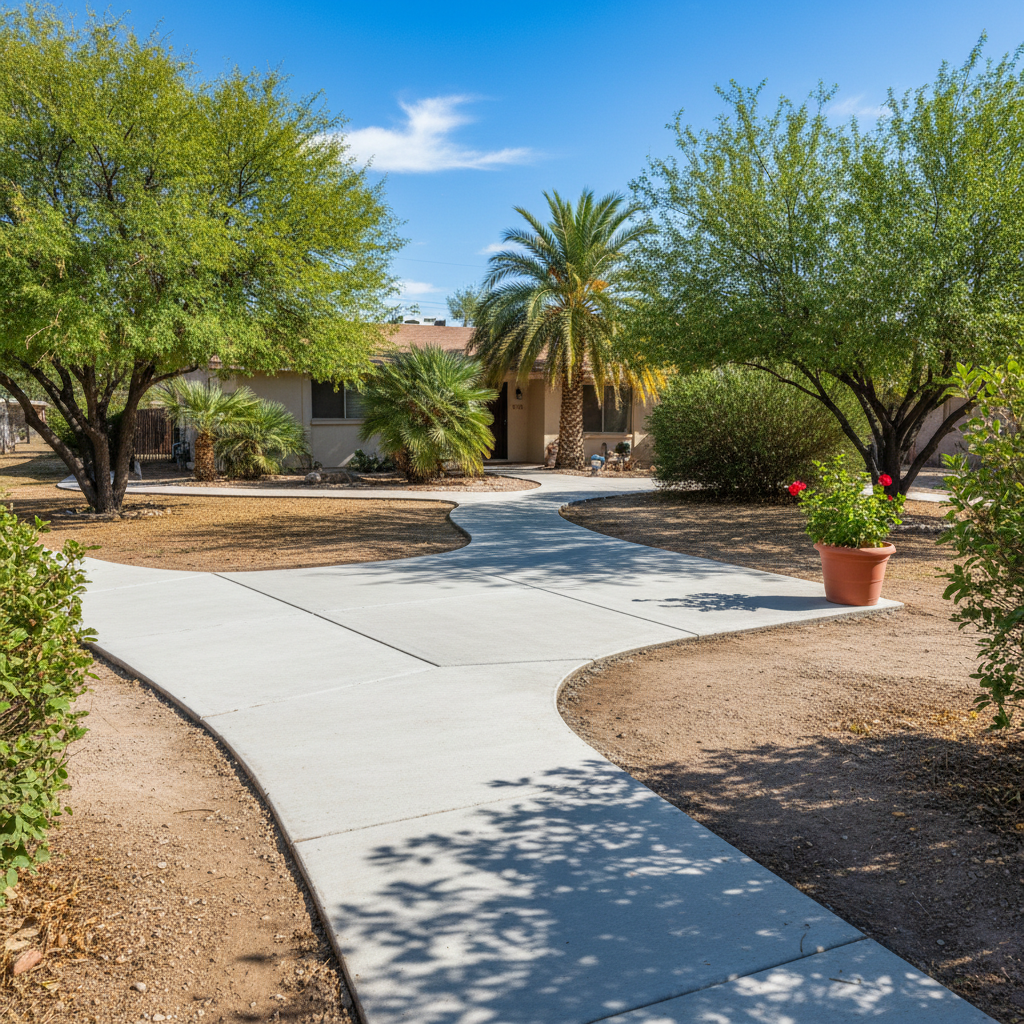
Alright, let's talk about concrete repair here in Coolidge. You've probably got some cracks in your driveway, a patio that's seen better days, or maybe a sidewalk that's settled a bit. It happens to the best of us, especially with our desert climate and that caliche-rich soil we've got around here. The intense summer heat and those sudden monsoon downpours really put our concrete to the test, causing expansion, contraction, and sometimes, shifting ground.
When you're looking at getting that concrete fixed, the first thing on your mind is usually, "How much is this going to set me back?" It's not a one-size-fits-all answer, but I can give you a solid idea of what to expect and what drives those prices up or down. So, let's dive in.
What Affects Concrete Repair Pricing?
A few big things play a role in the final bill. It's not just about the size of the crack; it's about what caused it and what kind of fix it really needs.
- Damage Type and Severity: A hairline crack is a whole lot different from a major structural crack or a sunken slab. Minor surface issues cost less to fix than deep, wide cracks or significant settling.
- Repair Method: Are we talking about simply filling a crack, resurfacing an area, lifting a sunken slab, or replacing a whole section? Each method has different labor and material costs, you know?
- Size of the Area: This one's pretty obvious. A bigger area means more materials and more labor. Sometimes, though, smaller jobs can have a higher per-square-foot cost due to minimum service fees.
- Accessibility: If the crew has to haul equipment and materials a long way, or if it's a tight spot to work in, that's going to add to the labor time and cost.
- Underlying Issues: This is a big one in Coolidge. Our expansive soils and the way water drains (or doesn't) can cause a lot of concrete problems. If we don't address what caused the damage in the first place, you'll be repairing it again. Fixing drainage or stabilizing the soil underneath will add to the cost, but it's crucial for a lasting repair.
- Material Costs: The type of filler, concrete, or leveling material used will impact the price. For instance, polyurethane foam for lifting is often pricier than the slurry used in mudjacking.
Typical Cost Ranges for Concrete Repair in Coolidge
Let's get down to some numbers. Keep in mind these are ranges, and your specific project will get a custom quote.
- Crack Repair:
- For small, non-structural cracks (up to 1/2 inch wide), sealing them with caulk or epoxy can run you anywhere from $150 to $500 per crack. Sometimes, if it's just a hairline, you might see costs as low as $50-$150.
- If it's a deeper, structural crack that needs epoxy injection to bond the concrete back together, you're looking at $250 to $500 per crack.
- For a whole driveway with multiple cracks, professional sealing might be $100 to $1,000.
- Resurfacing and Overlays:
- If your concrete surface is just worn, stained, or has minor spalling, a basic resurfacing can cost $3 to $7 per square foot.
- For decorative resurfacing, like a stamped or stained overlay, that's more like $8 to $15 per square foot.
- For an entire driveway or patio, resurfacing can range from $2,000 to $5,000.
- Concrete Leveling (Slab Jacking):
- This is for sunken or uneven slabs. Mudjacking (pumping a cement-based slurry) typically costs $3 to $8 per square foot, or $500 to $1,500 per section. For a typical residential project, you might see a total cost of $661 to $1,871, with an average around $1,232.
- Polyjacking (injecting expanding polyurethane foam) is usually more expensive, ranging from $5 to $25 per square foot or $800 to $2,500 per section. A small sidewalk section could be $650-$2,700, while a larger patio could be $1,200-$3,800. The minimum for a polyjacking job is often around $1,500.
- Overall, concrete leveling projects typically fall between $750 and $6,000+.
- Section Replacement:
- If a section is too damaged to repair, removing and replacing it can cost $8 to $15 per square foot. This includes demolition, disposal, and preparing the base for new concrete.
- A 50 square foot driveway section might be $400 to $750.
- Full concrete replacement can range from $2,000 to $15,000+ depending on the size and complexity.
Remember, many contractors have a minimum service fee, often ranging from $200 to $700, so a very small job might still hit that minimum.
What Should Be Included in a Quote?
When you get an estimate from Coolidge Concrete Paving or any other contractor, make sure it's detailed. A good quote should clearly outline:
- Scope of Work: Exactly what repairs will be done (e.g., crack filling, resurfacing, slab lifting).
- Materials: The specific materials to be used (e.g., type of sealant, concrete mix, foam).
- Preparation: How the area will be prepped, including cleaning, excavation, or sub-base compaction.
- Cleanup and Disposal: What happens to the old concrete or debris.
- Timeline: An estimated start and completion date.
- Warranty: Details on any guarantees for the work.
- Permits: If any permits are required from the City of Coolidge, who is responsible for obtaining them.
A serious contractor will always come out to your property to assess the damage before giving you a quote. Don't trust anyone who tries to give you a price over the phone without seeing the job.
How to Avoid Overpaying for Concrete Repair
Nobody wants to get ripped off. Here's how to make sure you're getting a fair deal:
- Get Multiple Quotes: This is probably the most important tip. Get at least three bids from different reputable contractors in the Coolidge area. This helps you compare prices and understand the typical cost for your specific project. Be wary of estimates that are significantly higher or lower than the others.
- Understand the Problem: Ask questions! A good contractor will explain what caused the damage and why their proposed repair method is the best solution. The more you know, the better you can evaluate the quotes.
- Check References and Reviews: Look for contractors with a solid reputation for quality work and fair pricing. Ask for local references.
- Don't Rush: Don't feel pressured to make a quick decision, especially if someone shows up unsolicited offering a deal. Take your time to review quotes and ask questions.
- Address Underlying Issues: As I mentioned, if you don't fix the root cause, you'll be paying for repairs again down the road. Make sure your chosen contractor includes solutions for drainage or soil stabilization if needed.
- Early Intervention: Small cracks can turn into big, expensive problems fast, especially with our soil movement. Fixing minor issues early is almost always cheaper than waiting until you need a full replacement.
Repairing your concrete is often a much more cost-effective solution than tearing it all out and starting fresh, sometimes saving you 50-80% compared to full replacement. Just make sure you're working with someone who knows their stuff and gives you an honest assessment. That's how we do things here at Coolidge Concrete Paving.