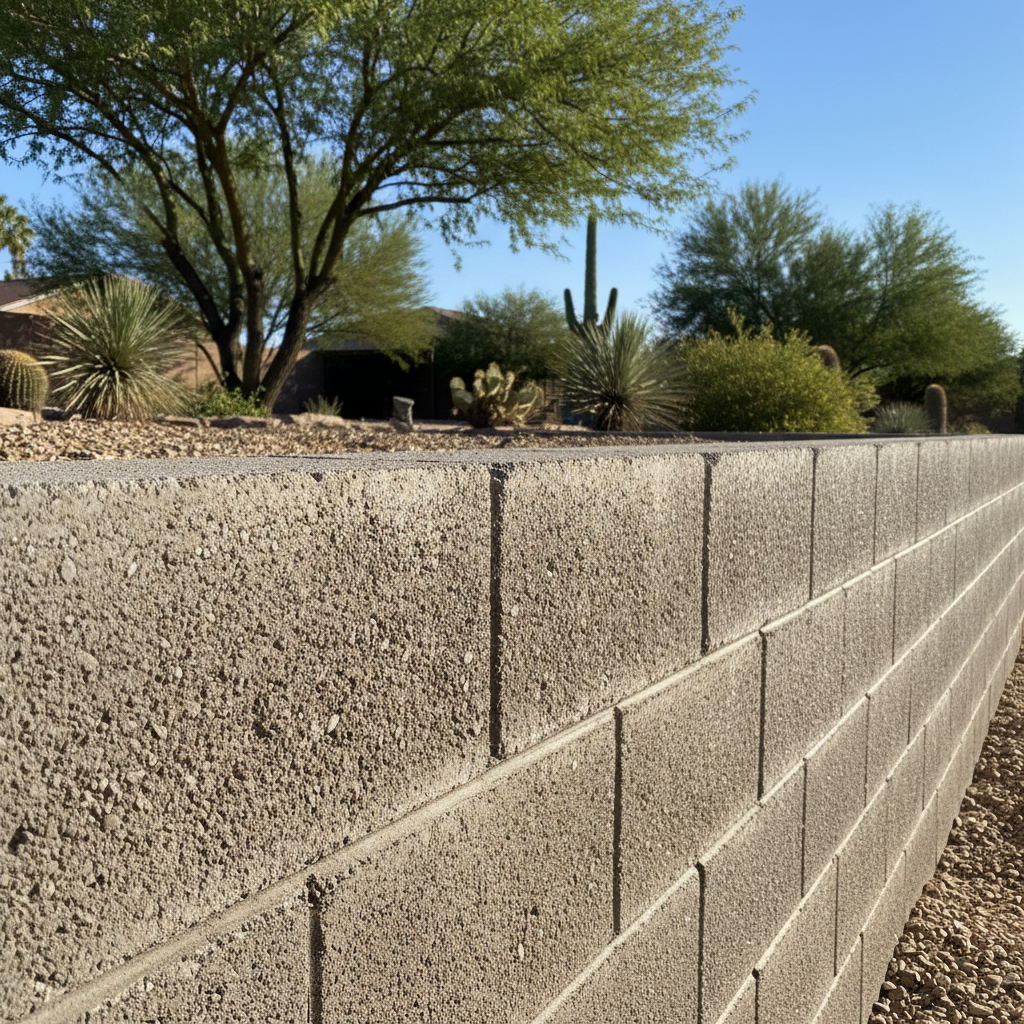
Do I really need a retaining wall, or can I just regrade my yard?
That's a question I hear a lot, especially from folks in older neighborhoods, you know, like the ones around Central Arizona College. Sometimes, a simple regrade is truly all you need, particularly if it's just a minor slope or a small drainage issue. We can bring in some fill dirt, shape it just right, and get water moving exactly where it needs to go.
But if you've got a significant elevation change – say, more than a couple of feet – or if you're trying to create a usable, flat space on a really steep hill, regrading alone just won't cut it. You'll simply end up with erosion problems, or even worse, a landslide during a heavy monsoon. That's when a retaining wall becomes absolutely essential. It's not just about how it looks; it's about structural integrity and keeping serious damage from happening to your property or your neighbor's.
What's the difference between a gravity wall and a cantilever wall?
Okay, this can get a little technical, but it's good to understand the basics. Most of the residential retaining walls we build here in Coolidge are either gravity walls or cantilever walls, though sometimes we do a bit of a hybrid.
- Gravity walls are exactly what they sound like: they rely on their own weight and sheer mass to hold back the soil. Think big, heavy blocks or thick concrete sections. They're usually wider at the bottom and get a bit narrower as they go up. For shorter walls, let's say up to 4 feet, they can be a really solid, cost-effective choice.
- Cantilever walls are more common for taller walls or when space is a bit tight. They use a thinner, vertical stem connected to a wider footing that extends back into the soil. The weight of the soil sitting on that footing helps stabilize the wall, pretty clever, right? These walls often have steel rebar reinforcement inside to handle the bending forces. They're more complex to design and build, but they're incredibly strong for higher loads. We'll figure out which one makes the most sense for your specific yard and soil conditions, don't worry.
How tall can a concrete retaining wall be without needing special permits?
This is super important, and it varies a bit depending on the specific jurisdiction, but generally, here in Coolidge and Pinal County, a retaining wall over 4 feet in height (measured from the bottom of the footing to the very top of the wall) usually needs a building permit and engineered plans. Some places might even count the height from the lowest adjacent grade, so watch out for that. Anything over that 4-foot mark means you're dealing with significant soil pressure, and you definitely want to make sure it's designed right to prevent collapse. We always handle the permit process for our clients, so you don't have to worry about missing any steps.
Will a retaining wall fix my drainage issues?
It can definitely help, but it's not a magic bullet all by itself. A well-designed retaining wall will always include a proper drainage system behind it. This usually means a layer of gravel or crushed rock, and a perforated pipe (we call it a 'French drain') at the base of the wall. This system collects any water that seeps through the soil behind the wall and directs it away, stopping hydrostatic pressure buildup that could push the wall over. Without good drainage, even the strongest wall can fail. So, yes, it's part of the solution, but it's not just the wall itself doing all the heavy lifting.
How long will a concrete retaining wall last in the Arizona heat?
A properly built concrete retaining wall, using quality materials and good construction practices, should last for decades. We're talking 50 to 100 years, easily. Concrete is incredibly durable, especially when it's reinforced correctly. The biggest enemies are poor drainage, which we just talked about, and improper compaction of the backfill soil. If water sits behind the wall or the soil settles unevenly, that's when you can run into problems like cracking or leaning. That's why Coolidge Concrete Paving focuses so much on the foundation and the backfill process – it's just as important as the concrete pour itself, believe it or not.
What kind of maintenance does a concrete retaining wall need?
Honestly, one of the best things about concrete retaining walls is how little maintenance they need. Once it's built right, you mostly just need to keep an eye on it. Make sure the drainage outlets aren't clogged with leaves or other debris. Check for any signs of erosion at the base or around the ends of the wall. If you see any significant cracking, leaning, or bulging, that's a sign to call us out for an inspection. But for the most part, you can just enjoy your new, stable yard. You won't be out there sealing it every year like a wooden fence or repointing mortar like a stone wall. It's truly a set-it-and-forget-it kind of solution.