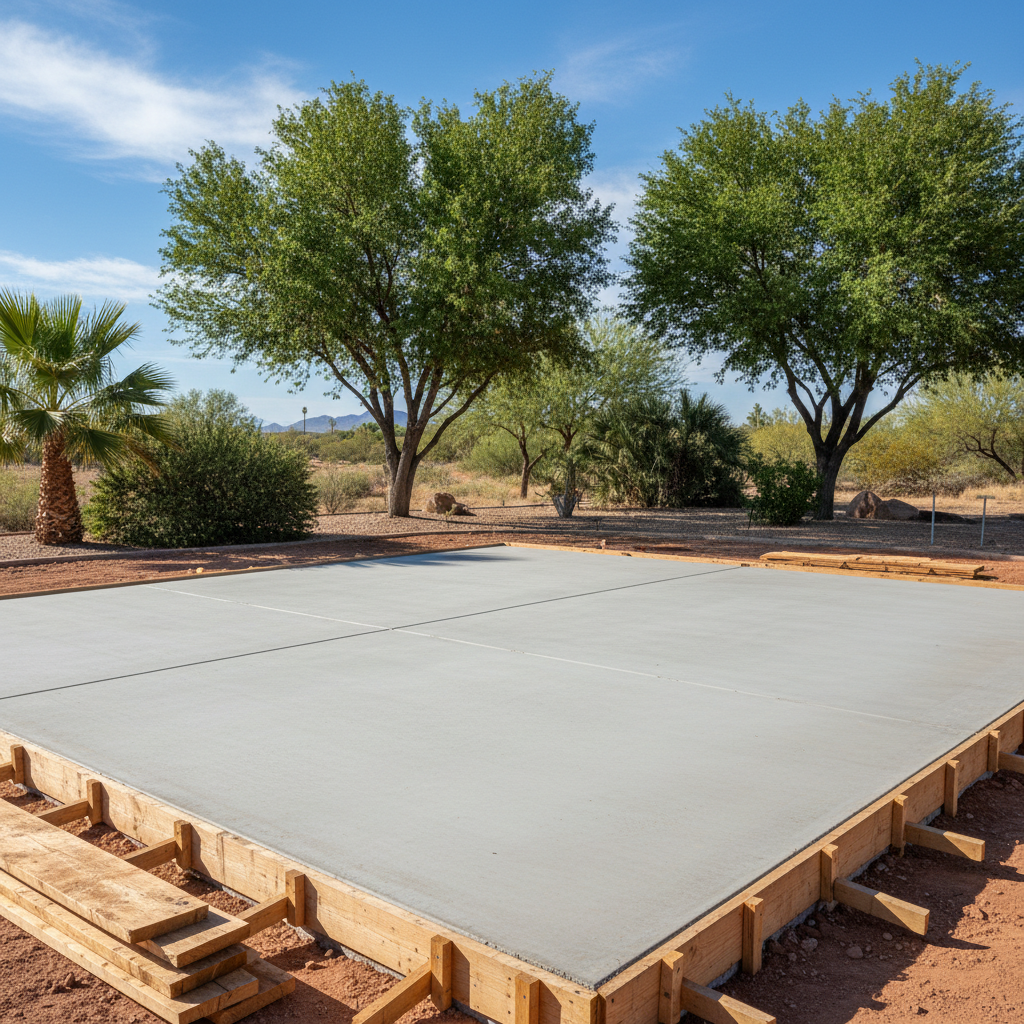
Alright, let's talk about your concrete foundation here in Coolidge. It's the backbone of your home, and frankly, it takes a beating with our Arizona weather. You've got extreme heat, those sudden monsoon downpours, and then the dry, dusty spells. It's a lot for a slab to handle. As someone who's poured a lot of concrete around these parts, I've seen firsthand what works and what doesn't.
When to Schedule Concrete Work: Timing is Everything
If you're thinking about new concrete – a patio, a driveway, or even a foundation repair – timing is crucial. You don't want to pour in the dead of summer, not if you can help it. Those 110-degree days? That's a recipe for concrete curing too fast, leading to cracks and a weaker finish. We're talking about thermal shock and rapid evaporation of the water in the mix, which is essential for proper hydration.
The sweet spot for us is usually spring or fall. Think March through May, or October through November. The temperatures are milder, usually in the 70s or 80s, which allows the concrete to cure slowly and develop its full strength. We still take precautions, of course, like keeping the slab damp for longer, but the ambient conditions are just better. If you absolutely have to do it in summer, we'll be working at dawn, using retarders in the mix, and covering the fresh concrete immediately to protect it from the sun. It's more complicated, and honestly, more expensive because of the extra steps we have to take.
Weather Conditions That Mess With Concrete
Beyond just temperature, a few other weather factors can really throw a wrench into concrete work.
- High Winds: Even if it's not scorching hot, strong winds can dry out the surface of fresh concrete way too fast. This can cause what we call 'plastic shrinkage cracking' – those spiderweb-like cracks that appear before the concrete has even fully set. We'll often use windbreaks or apply evaporation retardants to combat this.
- Rain: Obvious, right? You don't pour concrete in the rain. It washes out the cement paste, weakens the mix, and can leave a really rough, pockmarked surface. If there's a chance of rain, we reschedule. Simple as that.
- Humidity: Believe it or not, low humidity, common here, can be just as bad as high temperatures for drying out concrete too quickly. We're always monitoring the dew point and relative humidity to make sure the conditions are right for a good pour.
It's why you hire professionals like us at Coolidge Concrete Paving. We know these local conditions and how to work with them, not against them.
Protecting Your Concrete Investment Year-Round
So, you've got your foundation, your patio, your driveway. How do you keep it looking good and performing its best for years to come? It's not just a 'set it and forget it' situation, especially here.
First off, sealing is huge. I can't stress this enough. A good quality penetrating sealer applied every few years (depending on the product and traffic) will protect your concrete from moisture, oil stains, and even those harsh UV rays that cause fading and surface degradation. It also helps prevent water from getting into tiny cracks and expanding when temperatures fluctuate, which can lead to spalling.
Next, drainage around your home is critical. This is especially true for foundations. Make sure your landscape slopes away from your house. If water pools against your foundation, especially during monsoon season, it can saturate the soil. Here in Coolidge, we often have expansive clay soils. When these soils get wet, they swell, putting immense pressure on your foundation walls. When they dry out, they shrink, leaving voids. This constant movement can lead to foundation cracking and settlement. Gutters and downspouts that direct water far away from the foundation are your best friends.
Finally, address small cracks early. Don't ignore them. A hairline crack might seem minor, but it's an open invitation for water, dirt, and even pests. Get them repaired by a pro before they become a major structural issue. It's always cheaper to fix a small problem than a big one.
Look, your home is likely your biggest investment. Taking care of its foundation isn't just about curb appeal; it's about structural integrity and peace of mind. If you've got questions about your concrete or need some work done, give us a call. We're here to help you keep things solid.