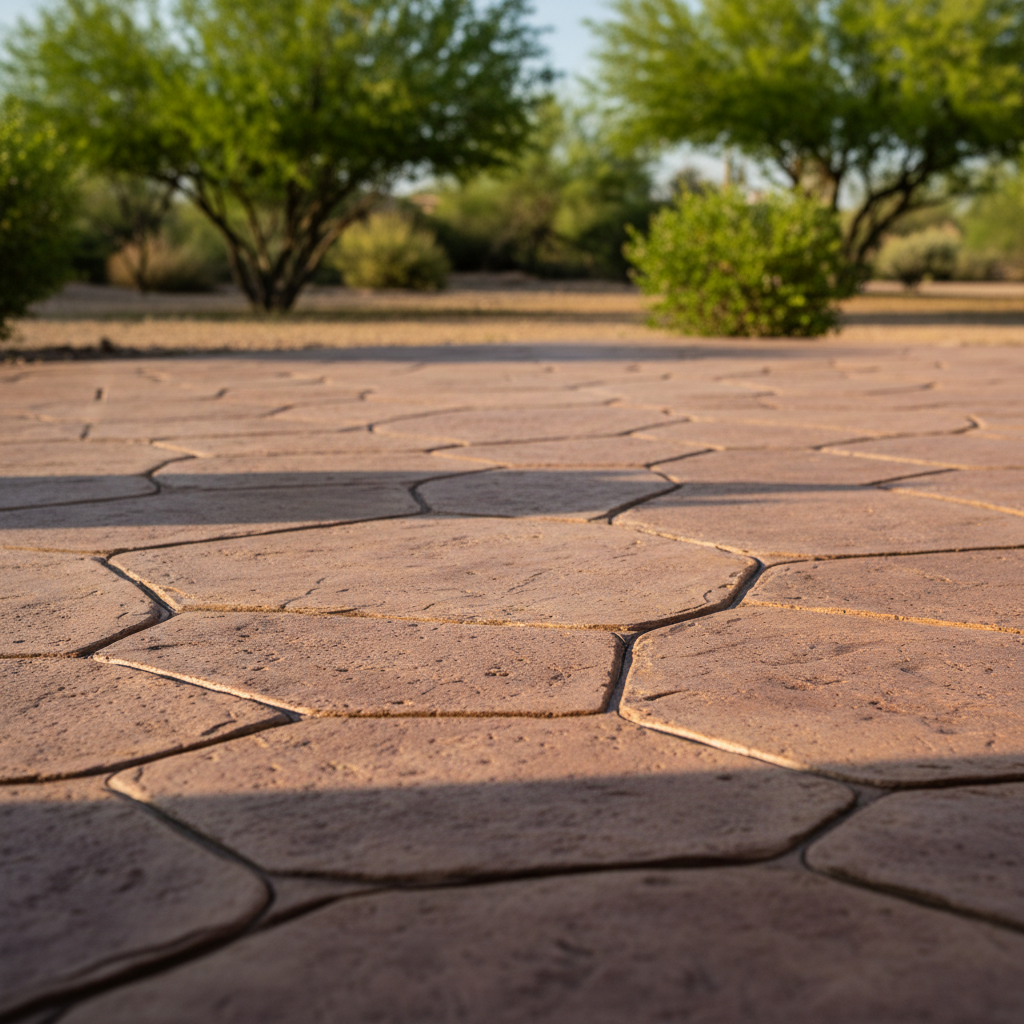
Many homeowners look at a plain grey backyard slab and wish it had more personality. Around Coolidge, we get plenty of intense sun and caliche-heavy soil that makes standard concrete look tired fast. Adding decorative flair like staining, scoring, or light stamping completely changes an outdoor living space without requiring a total teardown. Coolidge Concrete Paving breaks down what goes into making these projects actually last in our desert climate.
Before the Work Starts: Planning and Prep
Getting ready is ninety percent of the battle, especially when you are dealing with Pinal County heat. If you are planning a backyard makeover, look closely at your existing slab. Is it structurally sound, or are there massive cracks shifting around? Small hairline cracks are totally normal here, but if one side of your patio has sunk two inches into the dirt, slapdash staining will not save it. You need a solid base. Clear everything off, pressure wash the surface thoroughly, and let it dry out completely. Moisture trapped underneath will ruin a stain or sealer faster than you can blink.
DIY vs. Calling the Pros: Where to Draw the Line
Property owners often tackle a weekend project, and acid-staining an existing patio is something you can do on your own if you have the patience. You buy the pump sprayer, mix the chemical solution, scrub it in, and neutralize it. It is messy, and you will smell like vinegar for a day, but the results look sharp. On the flip side, mixing and pouring new decorative concrete or attempting complex stamping on a large driveway is where people get into trouble. Concrete sets very fast when it is ninety-five degrees outside. If you hesitate for two minutes while stamping a pattern, you are left with a permanent mistake.
During the Pour and Application
If you hire Coolidge Concrete Paving to handle a new decorative patio or walkway, you will see us moving fast once the truck arrives. Timing is everything in this trade. We screed, float, and apply color hardeners or release agents while the cream is still workable. If you are doing a DIY stain or epoxy coating on an existing slab, work in small sections. Keep out of direct midday sunlight if you can, or the product flashes too quickly and leaves ugly lap marks. Wear proper gear, including respirators and thick gloves, because these items are not optional when dealing with chemical stains and heavy sealers.
After the Project: Keeping It Looking Good
Once your decorative concrete is cured and sealed, maintenance is straightforward, but you cannot ignore it. Our blowing desert dust and fine sand act like sandpaper over time. Sweep your patio regularly so grit does not grind into the finish. Coolidge Concrete Paving recommends that you also reapply a quality sealer every few years depending on how much direct sun exposure that specific part of your yard gets. Skip the harsh chemical cleaners and stick to mild soap and water. Take care of it right, and your upgraded concrete will handle the Pinal County weather without missing a beat.