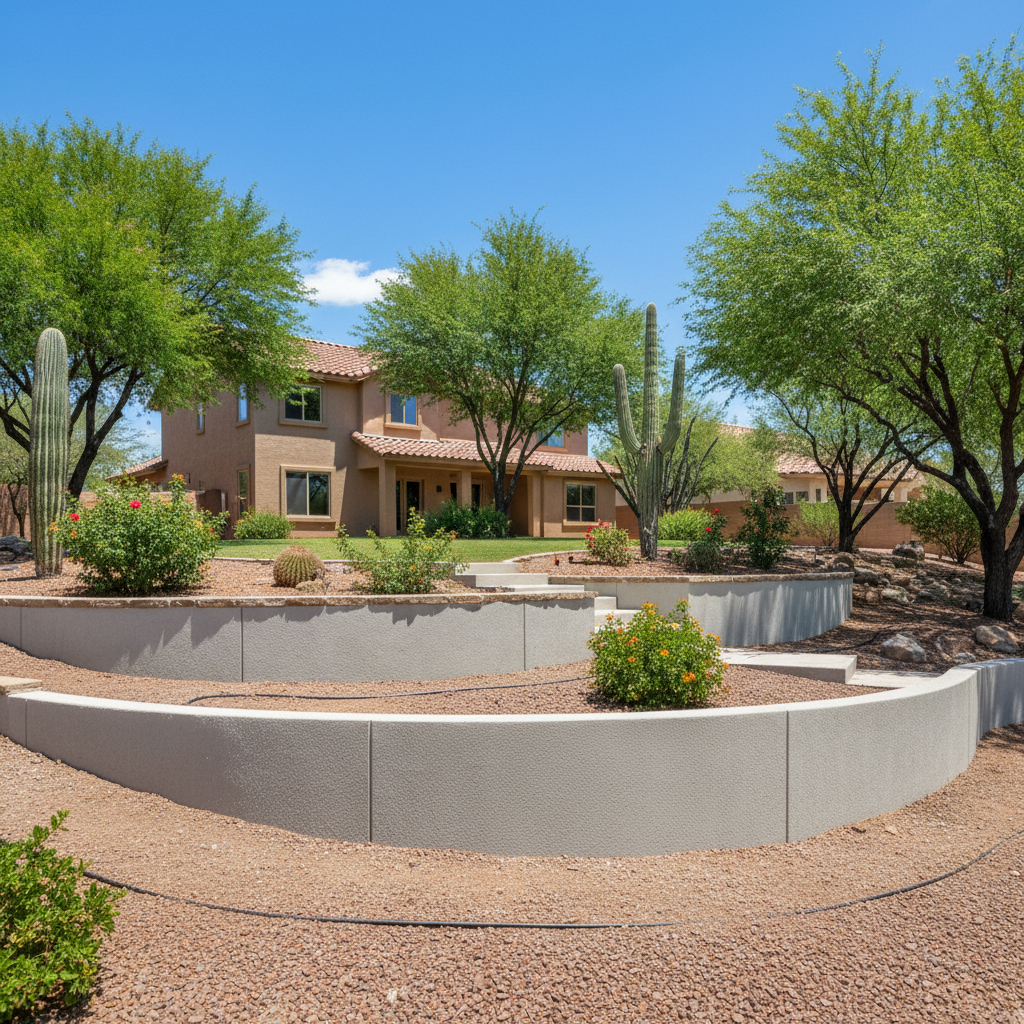
So, you're thinking about a concrete retaining wall for your place here in Coolidge. Maybe your yard slopes a bit, or you're trying to carve out some flat, usable space. Smart move, because a well-built concrete retaining wall can seriously last for decades. It really adds value and makes your home more functional. But getting it right, especially in our unique desert environment, means looking beyond just how it looks.
When to Get Your Retaining Wall Built
This is probably the question I hear most often. People want to know the absolute best time to pour concrete for something as important as a retaining wall. My honest answer? Try to steer clear of the very hottest part of summer if you can. July and August here in Coolidge are brutal; temperatures often shoot past 110 degrees. Pouring concrete in that kind of heat demands a lot of extra care – we're talking about adding ice to the mix, using retarders to slow down how fast it sets, and constantly misting it to stop it from drying out too quickly and cracking.
It's not like it's impossible, don't get me wrong. We do it when we absolutely have to. But if you've got some wiggle room, I'd aim for the cooler months instead. Fall, winter, and early spring are perfect. The concrete cures slower then, which is actually a really good thing for its strength and how long it lasts. You end up with a better, more consistent finish, and honestly, it's just easier on everyone working on it. Plus, you won't be out there baking while we're getting things done, right?
Weather Conditions That Really Matter
Beyond just the heat, there are a couple of other weather factors we watch like hawks. Wind is a big one. Our desert winds, especially during monsoon season, can dry out concrete way too fast. That quick evaporation can lead to surface cracks, which are a real headache to fix and can mess with the wall's strength. We'll often put up windbreaks or use special curing compounds to fight this, but a calm day? Always our first choice.
Rain, believe it or not, isn't always a deal-breaker. A little drizzle after a pour can actually help with curing by keeping the surface wet. But heavy, steady rain? That's a problem. It can wash out the cement paste, weaken the mix, and totally ruin the finish. If the forecast is calling for a downpour, we're definitely rescheduling. It's just not worth risking the quality of your retaining wall. And remember, we're talking about a structure that's holding back a lot of soil; it really needs to be solid.
Keeping Your Concrete Retaining Wall Safe Year-Round
Once your wall is in and has cured properly, you'll want to make sure it lasts. Here's how to protect your investment:
- Good Drainage is Essential: This isn't something you can skip for retaining walls. We'll always put in a drainage system behind the wall – usually a perforated pipe and gravel backfill – to stop water pressure from building up. If water collects behind the wall, it's going to push on it, and eventually, even the toughest concrete can crack or bow. Just make sure those weep holes or drainage outlets stay clear of any junk.
- Curing Compounds/Sealants: We'll put on a curing compound right after the pour to help the concrete get as strong as possible. After that, I often suggest a good quality concrete sealant, especially for retaining walls. It helps shed water, protects against freeze-thaw cycles (less of a problem here than up north, but it does happen sometimes), and makes the surface easier to clean. Just reapply it every few years, following what the product maker says.
- Watch for Cracks (but don't freak out): Concrete cracks. It's just how it is. Small hairline cracks usually aren't anything to stress over. But if you see cracks that are getting wider, or if the wall itself looks like it's leaning or bulging, that's when you need to give us a call. Catching it early can save you a lot of trouble and money down the road.
- Keep it Clean: Dirt, grime, and even efflorescence (those white powdery deposits) can build up. A quick pressure wash with plain water or a mild detergent can keep your wall looking sharp. Just be careful not to use too high a pressure setting, especially on older concrete, as it can damage the surface.
A concrete retaining wall is a pretty big investment, and we at Coolidge Concrete Paving want to make sure you get the best possible outcome. By understanding our local climate and taking a few proactive steps, you can be sure your wall will stand strong and look great for many, many years to come. If you've got questions or are ready to chat about a project, just give us a call.