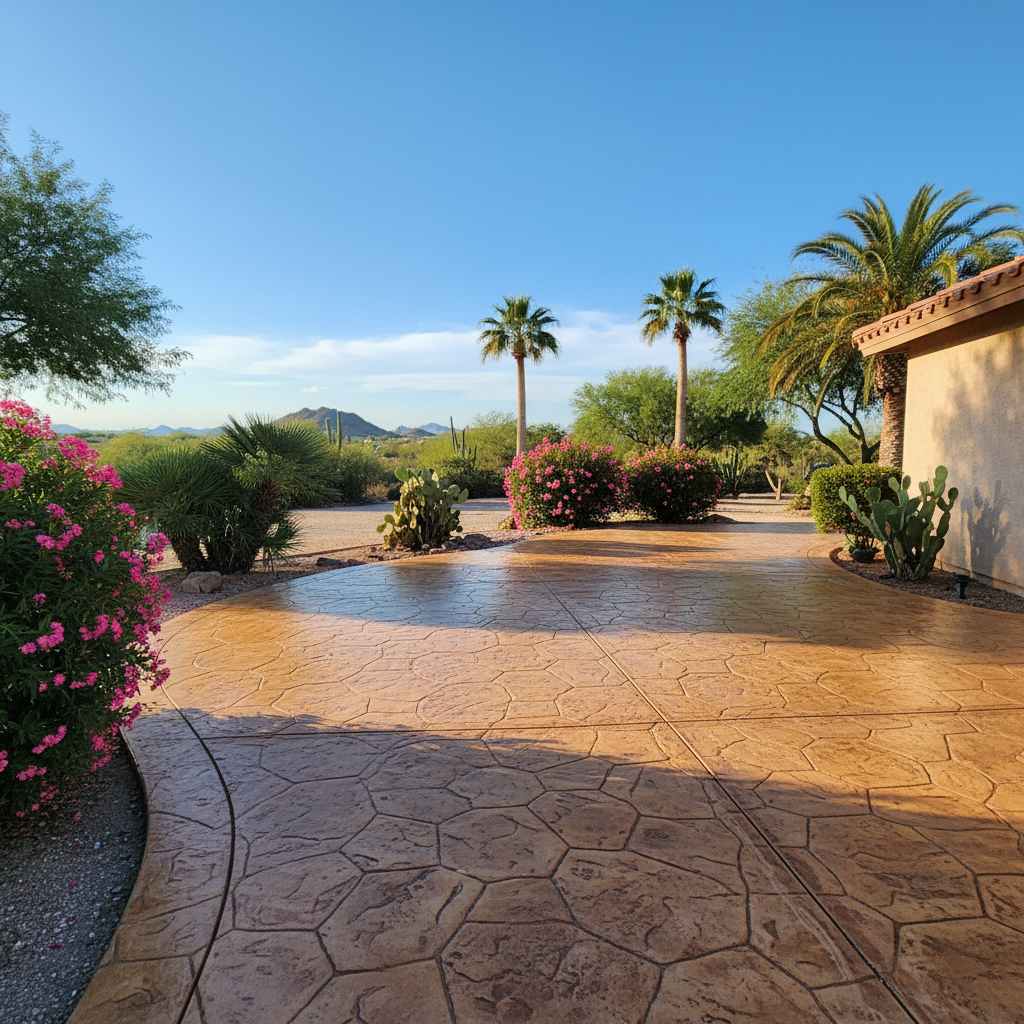
So, you've got stamped concrete. Maybe it's a patio, a walkway, or even a fancy driveway. You picked it for a reason, right? It looks fantastic, adds real curb appeal, and it's tougher than plain old concrete. But here in Coolidge, with our intense sun and dust, even the best stamped concrete needs some attention to keep it looking sharp year after year. I've seen too many beautiful jobs go dull or start showing wear because folks didn't know how to properly care for them. Let's talk about what you need to do.
Extending the Life of Your Stamped Concrete
The biggest thing you can do to protect your stamped concrete, especially in our desert climate, is to keep that sealant in good shape. Think of it like sunscreen for your concrete. The sun here is brutal, and it'll fade colors and break down the surface faster than you'd believe. I tell all my clients, including those in the older neighborhoods around Central Arizona College, that resealing is critical.
- Reseal Regularly: For residential stamped concrete, I usually recommend resealing every 2-3 years. If it gets heavy foot traffic, or if it's in direct, all-day sun with no shade, you might even need to do it yearly. How do you know it's time? If water soaks into the concrete instead of beading up, that's your sign.
- Pick the Right Sealant: Not all sealants are created equal, you know. You want a high-quality acrylic or polyurethane sealer that's designed for exterior concrete and offers UV protection. Don't cheap out here; a good sealant is an investment that really pays off.
- Clean Before Sealing: You wouldn't wax a dirty car, right? Same principle applies. Make sure the surface is spotless, dry, and free of any old, peeling sealant before you put on a new coat.
Regular Maintenance: Keep It Clean
Beyond resealing, daily and weekly care goes a long way. It's not rocket science, just common sense.
- Sweep or Blow Off Debris: Dust, leaves, grit – it all acts like sandpaper on your sealant. A quick sweep or leaf blower session once a week keeps that abrasive stuff off the surface.
- Hose It Down: Every couple of weeks, give it a good rinse with a garden hose. This helps wash away fine dust and dirt that sweeping might miss.
- Mild Soap and Water: For tougher grime, mix a mild dish soap with water and use a soft brush or mop. Rinse thoroughly afterward. Avoid harsh chemicals, as they can strip the sealant or even damage the concrete itself.
- Watch for Stains: If you spill something like oil, grease, or even a sugary drink, clean it up immediately. The longer it sits, the harder it is to remove, and it can sometimes leave a permanent mark, especially if your sealant is worn down.
Warning Signs: When Something's Not Right
Your stamped concrete will usually tell you when it needs more than just routine care. Keep an eye out for these red flags:
- Fading Color: If your beautiful browns, grays, or reds are looking dull and washed out, your sealant is probably failing, and the sun is getting to your color.
- Peeling or Flaking Sealant: This is a clear sign the existing sealant has reached the end of its life. You'll need to strip it before applying a new coat.
- Cracks: Small hairline cracks might just be surface crazing, which is pretty normal for concrete. But if you see cracks that are widening, or if they're running deep, that's a bigger issue.
- Pitting or Spalling: This looks like small chunks of concrete flaking off the surface. It can be caused by moisture, de-icing salts (not usually an issue here, thankfully!), or poor installation.
- Uneven Settling: If one section of your stamped concrete patio or driveway starts to sink or lift, that's a sub-base problem, not just a surface one.
When to Call a Professional
Look, I'm a contractor, so I'm obviously going to say call a pro. But seriously, there are times when DIY just won't cut it, or when trying to fix it yourself could make things worse. If you're seeing any of those warning signs I just mentioned, especially anything beyond simple fading, it's probably time to give someone like us at Coolidge Concrete Paving a shout.
- Major Cracks or Settling: These often indicate structural issues with the base beneath your concrete. We've got the tools and expertise to assess the damage and recommend the right repair, whether it's slab jacking or a full replacement.
- Extensive Peeling or Hazy Sealant: Stripping old sealant can be a real pain and requires specific chemicals and equipment to do it right without damaging the concrete or staining surrounding areas. If your sealant has turned white or hazy, it's likely moisture trapped underneath, and that needs professional attention.
- Deep Stains: Some stains just won't come out with mild soap. We have commercial-grade cleaners and techniques that can often lift stubborn stains.
- You're Unsure: If you're looking at your stamped concrete and thinking,