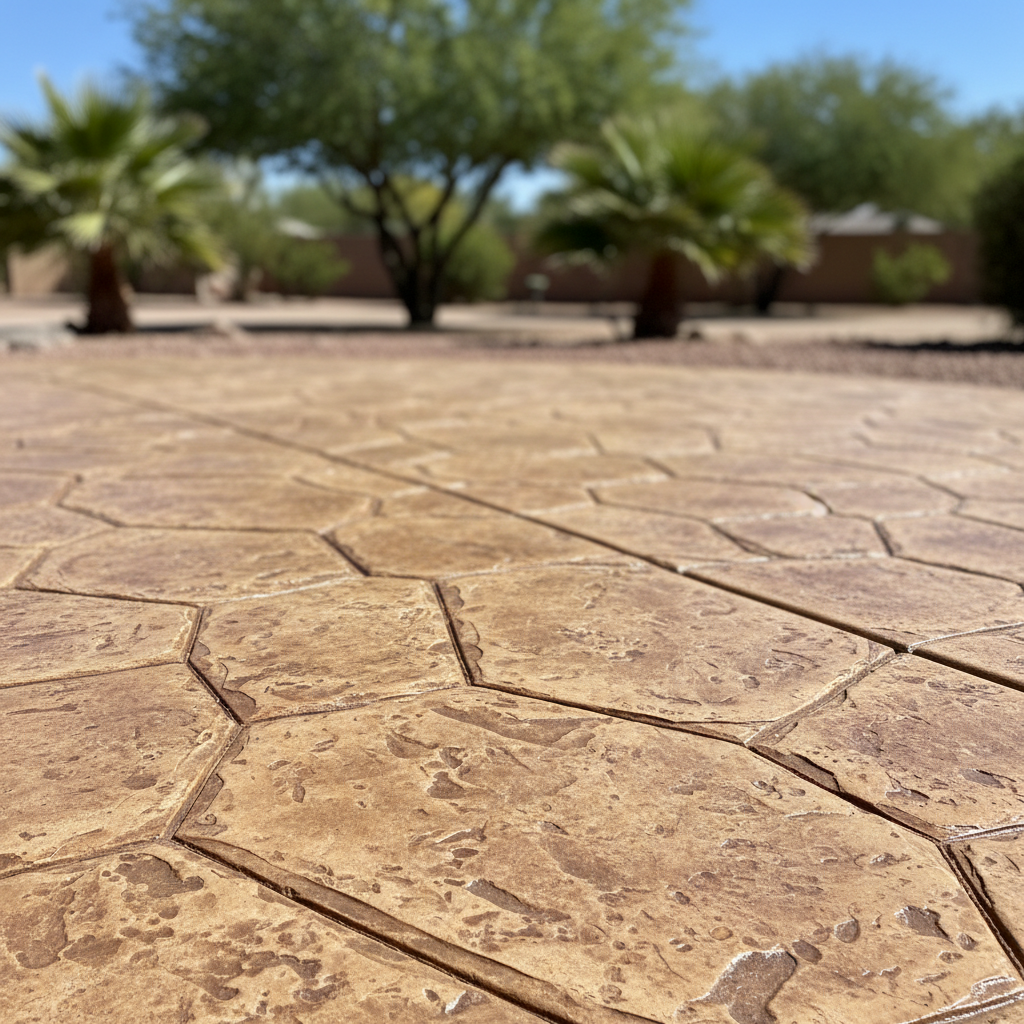
So, you're thinking about adding some decorative concrete to your place here in Coolidge.
So, you're thinking about adding some decorative concrete to your place here in Coolidge. Maybe it's for a new patio, a walkway, or even an indoor floor. It's truly a fantastic way to give your home real character and boost its value, but like any big home project, you really need to understand what you're getting into. I've seen a lot of concrete jobs come and go in this town over the years, and I'm ready to give you the honest truth about decorative concrete projects.
Before You Start: Planning & What to Think About
First things first, let's just clarify what decorative concrete actually means. It's not that plain, boring gray stuff anymore. We're talking about concrete that's been spruced up with color, texture, or both to make it look great. Picture stained finishes, colored concrete, or even polished surfaces. It can actually look like all sorts of materials — stone, brick, or even wood.
DIY or Pro? That's the Big Question.
Look, I'm all for homeowners tackling projects themselves. There's a real sense of accomplishment in it, and it can save you some money. For smaller, simpler decorative concrete tasks, you can definitely handle some of the work yourself. Things like little concrete crafts, planters, or even coasters are perfect DIY projects. You can tint or stain small batches of concrete to get a different color, no problem. But when it comes to pouring a whole patio, a driveway, or anything structural, you're almost always better off calling a professional.
Why, you ask? Well, concrete work, especially the decorative kind, really demands skill and the right gear. If you mess up the mix, the pour, or the finish on a big project, you're looking at cracks, uneven surfaces, and some seriously expensive repairs down the road. Plus, for anything significant like a new driveway or a large patio, you'll probably need a permit from the City of Coolidge's planning department. We can certainly help you figure out that whole process.
Understanding Our Coolidge Soil
Here in Coolidge, our soil is a pretty big deal. We've got a lot of clay in Arizona, which means expansive soils. This stuff can shift and expand when it gets wet, then shrink when it dries out. This movement can cause real headaches for concrete slabs, leading to cracks and settlement if nobody deals with it properly. That's why good site preparation, like putting down a solid gravel base, is absolutely critical to stop settling and cracking. We often come across silt loam around here, and it still has that clay component.
During the Project: What to Expect
If you're going the DIY route for a small project, just take your time. Don't rush mixing the concrete or putting it down. Getting the measurements and mixing just right is key to avoiding problems. For bigger projects, when you hire a company like Coolidge Concrete Paving, you're getting people who really know our local conditions. We understand how the Coolidge heat impacts new concrete while it's curing, and we plan for that. We'll make sure the sub-base is properly compacted and that drainage is sorted, especially with our desert downpours, so water moves away from your home.
For decorative finishes, you've got tons of choices. Staining can give you deep, luxurious colors. Overlays can make an old, worn-out concrete surface look brand new. Polished concrete offers a high-gloss finish. Your pro will walk you through these options and help you pick what works best for your home and your budget.
After the Project: Keeping It Looking Good
Once your decorative concrete is in place, you'll want to keep it looking sharp. It's not exactly a "set it and forget it" kind of thing, but it's not super complicated either.
- Cleaning: Sweep or blow off debris regularly – especially leaves or twigs – to stop staining. For spills, clean them up fast with a wet or dry cloth. For general cleaning, a damp mop with a pH-neutral cleaner works wonders. Just avoid harsh chemicals like bleach, ammonia, or vinegar; they can really damage the finish.
- Sealing: Decorative concrete usually gets several coats of protective sealer when it's installed. This helps prevent stains, makes the color pop, and protects against UV fading. You'll want to reseal it every 18 to 24 months, or every few years, depending on how much wear and tear it gets. Before resealing, pressure wash the surface to get rid of debris and old sealer, then let it dry for a good 24-48 hours before you put on new coats.
- Protection: Use mats at entryways to cut down on dirt and rocks getting tracked onto the surface, which can cause scratches. Try not to drag heavy furniture across it, okay? If you've got interior decorative concrete, think about using a commercial-grade floor wax to protect the sealer. In the rare event we get snow or ice – hey, it happens! – avoid de-icers and metal shovels, as they can damage the seal coating.
Taking care of your decorative concrete isn't just about how it looks; it's about making sure your investment lasts. With our intense Arizona sun, that sealer is working overtime to protect your colored and textured surfaces. Keep up with that maintenance, and you'll get to enjoy your beautiful concrete for years to come.