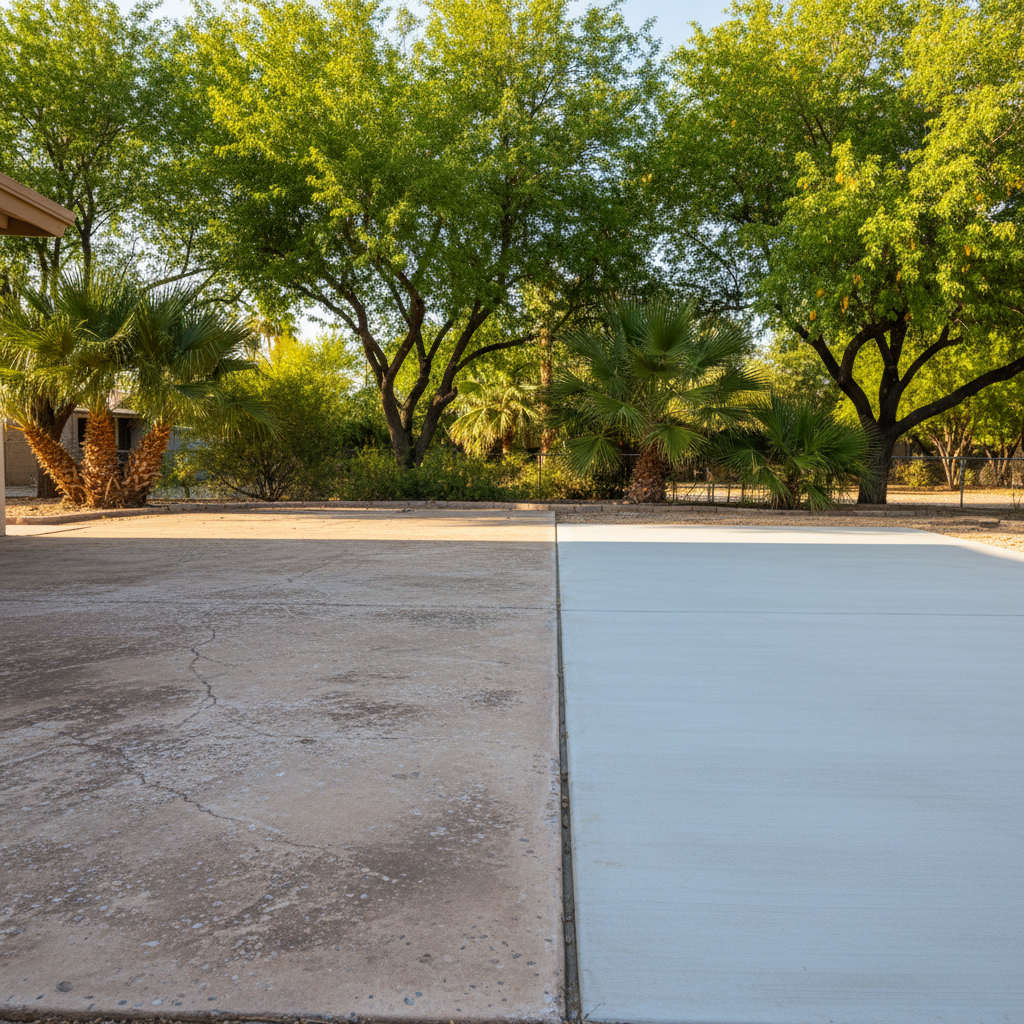
Is your patio sinking? Driveway cracking unevenly? Walkway becoming a trip hazard? If you live here in Coolidge, you've probably seen it, or you're dealing with it right now, haven't you? That shifting, settling concrete isn't just an eyesore; it's a real problem. When you're looking at repairs, two big options usually come up: slab jacking (sometimes called concrete lifting or mudjacking/polyjacking) or a full tear-out and replacement. Let's talk about which one makes sense for you.
Slab Jacking: The Lift and Level Approach
Slab jacking is pretty cool, honestly. Instead of ripping everything out, we drill small holes in your existing concrete slab. Then, we pump a material underneath it – either a cement-based slurry (that's mudjacking) or a high-density polyurethane foam (that's polyjacking). This material fills the empty spaces, and as it expands or builds pressure, it gently lifts the slab back to where it should be. It's like giving your concrete a shot in the arm, really.
Pros of Slab Jacking:
- Cost-Effective: This is usually the big one. Slab jacking can be a lot cheaper than a full replacement, often saving you 30-50%. You won't pay for demolition, hauling away old concrete, or as much new material.
- Faster: We're talking hours, not days. The area is typically ready for use almost immediately after we finish the work. No waiting around for new concrete to cure for days or weeks.
- Less Disruptive: No heavy machinery tearing up your yard, no big piles of broken concrete. It's a much cleaner, quieter process, which is always nice.
- Environmentally Friendly: You're reusing your existing concrete, which means less waste going to the landfill.
Cons of Slab Jacking:
- Not for Severely Damaged Slabs: If your concrete is completely shattered, crumbling, or has structural issues beyond just settling, slab jacking won't fix it. It's for lifting, not rebuilding.
- Appearance: While it levels the slab, it won't fix existing cracks or surface imperfections. We can seal cracks, but the original crack lines will still be there.
- Durability Depends on Material: Polyurethane foam is generally more stable and water-resistant than traditional mudjacking slurry, but both are designed to last.
Full Replacement: The Fresh Start
This option is exactly what it sounds like. We come in, break up all the old concrete, haul it away, prepare the ground underneath, and pour a brand-new slab. It's a complete do-over, plain and simple.
Pros of Full Replacement:
- Brand New Surface: You get perfectly smooth, crack-free concrete. If aesthetics are your absolute top priority, this delivers.
- Addresses Underlying Issues (Potentially): If the problem was really bad soil compaction or drainage, a professional replacement lets us properly re-compact the sub-base and address those issues before pouring.
- Structural Integrity: If your existing concrete is too far gone, cracked all the way through, or has major structural damage, replacement is the only safe option.
- Customization: You can change the size, shape, or even add decorative elements like stamping or coloring if you want a whole new look.
Cons of Full Replacement:
- Higher Cost: This is almost always the most expensive route due to labor for demolition, disposal fees, and the cost of all new materials.
- Time-Consuming: Demolition, prep, pouring, and then the crucial curing time. You're looking at days or even weeks before you can fully use the area again.
- Disruptive: It's messy, noisy, and involves heavy equipment. Your yard will definitely see some action.
- Waste: All that old concrete goes to a landfill, which isn't ideal for the environment.
Which One Should You Choose for Your Coolidge Home?
Okay, so you've got the rundown. For us here in Coolidge, with our expansive clay soils and the way things tend to shift with our monsoon rains and dry spells, settling concrete is a common headache. I've seen countless driveways and patios where the ground just gives way a bit.
Here's my honest take: For most homeowners dealing with a sunken, but otherwise structurally sound, concrete slab, slab jacking is usually the smarter choice. It's faster, significantly cheaper, and gets the job done without turning your property into a construction zone. You'll save money, time, and hassle.
However, if your concrete is truly crumbling, has massive, irreparable cracks, or if you're looking to completely redesign the area, then a full replacement is the way to go. You want a fresh start, and sometimes that's what's needed.
The best thing you can do? Get a pro to look at it. We'll come out, assess the damage, and give you an honest opinion on whether a lift or a full pour is best for your specific situation. Here at Coolidge Concrete Paving, we do both, so we're not trying to push you one way or the other. We just want to make sure you get the right fix for your home and your budget.
Don't let those trip hazards linger. Give us a call, and let's get that concrete leveled out or replaced right.