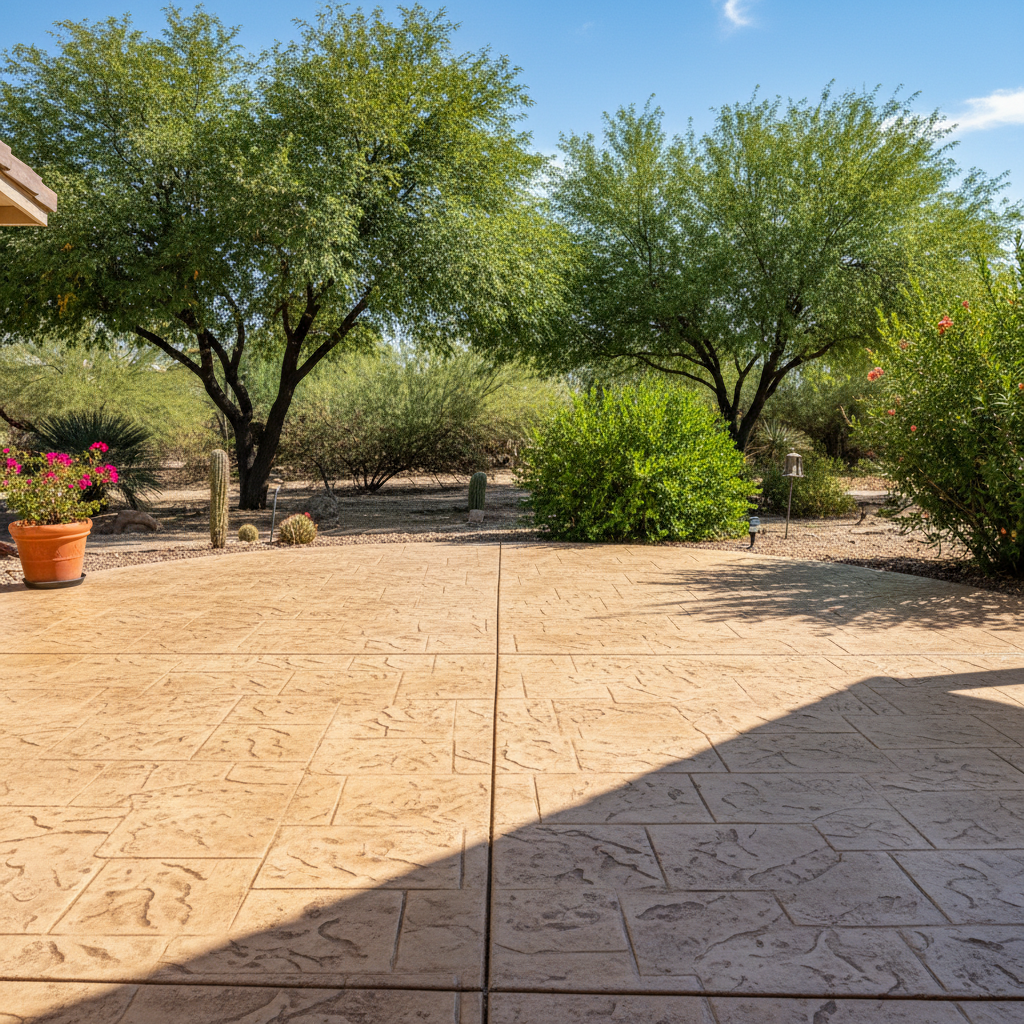
You've invested in stamped concrete, and that's a smart move. It adds curb appeal, boosts property value, and honestly, it just looks good. But like anything else worth having, it needs a little TLC to keep it from fading, cracking, or losing that beautiful finish. Especially here in Coolidge, where the sun beats down relentlessly and our monsoon season can bring some serious downpours, you can't just install it and forget it. I've seen too many folks neglect their stamped concrete, and then they're calling me up years later asking why it looks so rough. Let's make sure that's not you.
Regular Maintenance: Your First Line of Defense
Keeping your stamped concrete in top shape isn't rocket science, but it does require some consistency. Think of it like taking care of your car – a little regular maintenance goes a long way. The biggest thing you can do is keep it clean. Dust, dirt, leaves, and even those little mesquite pods can get ground into the surface, especially with foot or vehicle traffic. A simple sweep with a broom is usually enough for daily or weekly upkeep. For a deeper clean, grab your garden hose and a mild detergent. Nothing fancy, just a basic dish soap will do. Use a soft-bristle brush to scrub away any grime or spills. Then rinse it thoroughly. Don't let puddles sit for too long, especially if you've got a low spot in your patio or driveway – standing water can eventually break down the sealant.
You'll also want to watch out for oil or grease spills. If you're working on your car in the driveway or grilling on the patio, try to catch those spills quickly. The longer they sit, the harder they are to get out. A little degreaser designed for concrete can help, but always test it in an inconspicuous spot first to make sure it doesn't affect your color or sealant.
Sealing: The Secret to Longevity in Arizona
This is probably the most critical step for stamped concrete in our climate. The sealer is what protects your concrete from UV rays, moisture, stains, and abrasion. Without it, your beautiful patterns and colors will fade fast, and the concrete itself will be more susceptible to damage. In Coolidge, with our intense sun exposure and the extreme temperature swings we get, I recommend resealing your stamped concrete every 2-3 years. If it's a high-traffic area, like a busy driveway, you might even need to do it every year or two. How do you know it's time? A simple test: pour a small amount of water on the surface. If it beads up nicely, your sealer is probably still doing its job. If it soaks in and darkens the concrete, it's definitely time to reseal.
When you reseal, make sure the surface is completely clean and dry. Any dirt or moisture trapped under the new sealer will cause problems down the line. We use high-quality, UV-resistant acrylic sealers at Coolidge Concrete Paving because they hold up best against our Arizona sun. You can buy these at most home improvement stores, but make sure you get one specifically for stamped concrete and that it's compatible with your existing sealer, if you know what was used before. If you're unsure, it's always best to consult with a pro.
Warning Signs: Don't Ignore These
Your concrete will tell you when something's wrong, if you're paying attention. Here are a few things to look out for:
- Fading Color: If your vibrant patterns are starting to look dull and washed out, it's a clear sign your sealer is failing, and the sun is doing its damage.
- Flaking or Peeling Sealer: This means the existing sealer is breaking down. It'll need to be stripped and reapplied properly.
- Surface Cracks: Small hairline cracks can happen, especially with our expansive clay soils here around Coolidge. But if you see cracks getting wider, longer, or if pieces are breaking off, that's a bigger issue.
- Pitting or Spalling: This looks like small holes or divots in the surface. It can be caused by freeze-thaw cycles (rare here, but not impossible on colder nights if water sits), or by de-icing salts (which you shouldn't be using on stamped concrete anyway!).
- White Haze (Efflorescence): This powdery white substance is mineral salts coming up from within the concrete. It's usually harmless but indicates moisture movement and can make your concrete look dirty.
When to Call a Professional
Look, some things are just better left to the experts. If you're seeing extensive cracking, significant spalling, or if your sealer is peeling badly and you're not confident in stripping and reapplying it yourself, that's when you give us a call. We've got the tools and the experience to assess the damage and recommend the right fix. Sometimes it's a simple repair, other times it might need a more involved restoration. Don't wait until a small problem becomes a huge, expensive headache. Getting a professional opinion early can save you a lot of grief and money in the long run. We're here to help keep your stamped concrete looking its best for years to come.